Laminar Airflow OT System in Mumbai — How It Keeps Surgery Sterile
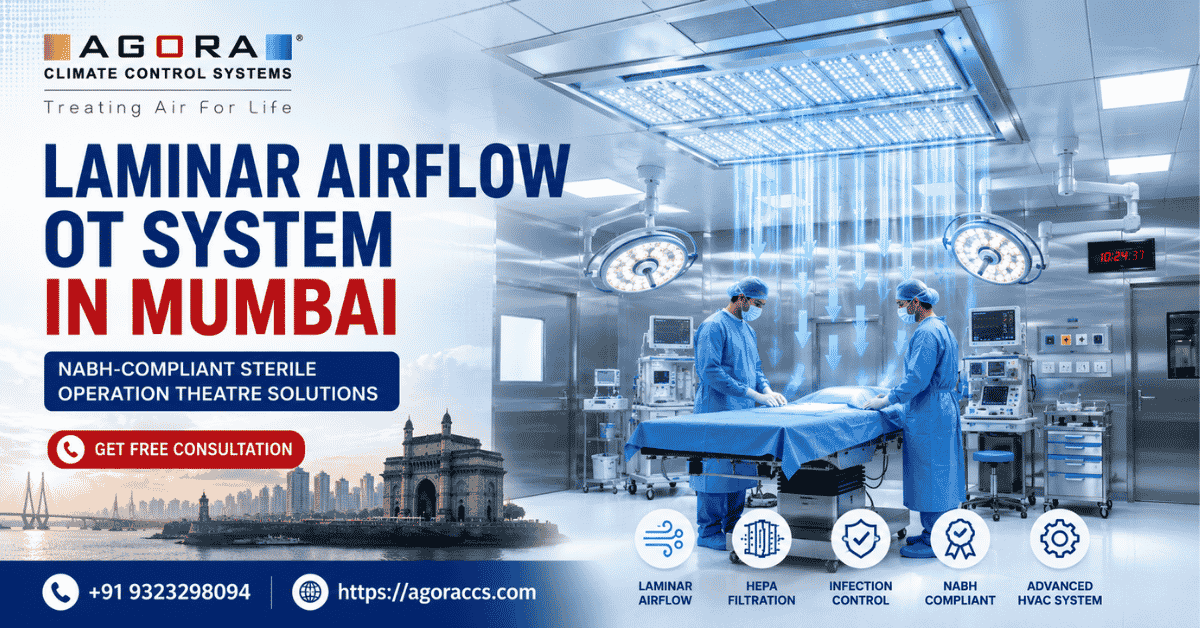
The laminar airflow OT system in Mumbai is the single most important piece of technology standing between a surgical patient and an airborne infection. Most people walking into an operating theatre never notice it. But the gentle, steady stream of ultra-clean air flowing down over the surgical table is doing one of the hardest jobs in the room. Sweeping away bacteria, dust, and contaminants before they can ever reach an open wound.
At Agora Climate Control Systems, we have been building laminar airflow systems for operating theatres across Mumbai and Maharashtra for over 16 years. In this guide, we will explain how a LAF system actually works, why it matters so much for surgical safety, and what to look for when choosing one for your hospital.
How Does a Laminar Airflow OT System Work?
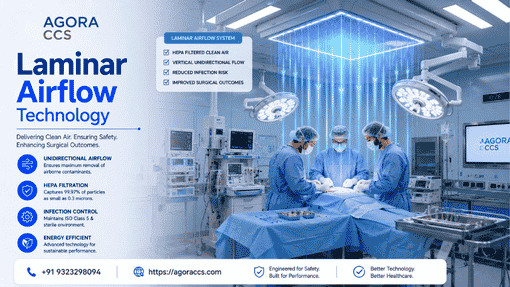
A laminar airflow OT system works by pushing filtered air in a single, uniform direction — usually straight down from the ceiling over the operating table. This is called unidirectional airflow. Here is what happens step by step:
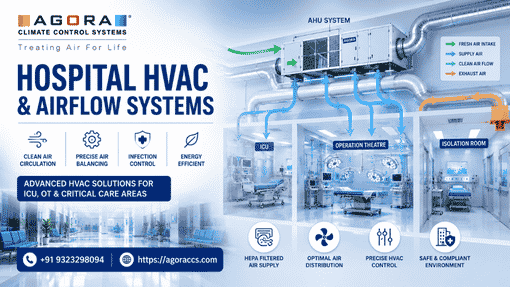
- Outside air is drawn into the air handling unit, where it is cooled, dehumidified, and pushed through multiple filter stages.
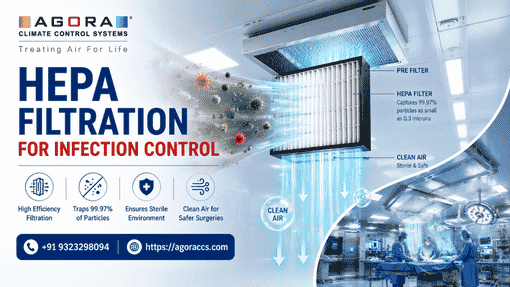
- The air then passes through terminal HEPA filters mounted in the ceiling, which trap 99.99% of particles down to 0.3 microns.
- This ultra-clean air flows downward in a smooth, even sheet at a controlled velocity over the surgical zone.
- The downward air sweeps airborne contaminants away from the patient and surgical instruments, towards the room’s return air grilles.
- Positive pressure inside the OT ensures no unfiltered air from corridors can leak in.
The result is an ISO Class 5 clean zone directly over the surgical table. The cleanest possible air your surgeon can operate in. This is why OT laminar airflow manufacturers in Mumbai treat air velocity and HEPA placement as the heart of the entire system.
Why a Laminar Airflow OT System Matters for Patient Safety
Surgical site infections are one of the most serious risks in any operation. A large share of these infections comes from airborne bacteria settling into the wound during surgery. A properly designed LAF system for OT in Mumbai dramatically reduces this risk by keeping the air over the surgical field continuously clean.
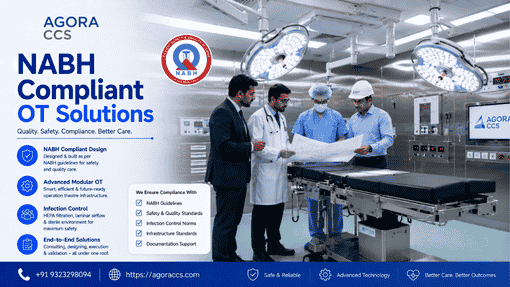
For procedures like joint replacements, cardiac surgery, and neurosurgery. Where even a tiny infection can be catastrophic, laminar airflow is not optional. It is a clinical necessity and a core requirement of NABH accreditation. This is exactly why hospitals across Maharashtra invest in advanced laminar OT systems rather than basic ventilation.
What to Look for in a Laminar Flow Operation Theatre Manufacturer
Not every laminar air flow manufacturer in Maharashtra delivers the same quality. Before you choose, check these points:
- Correct air velocity — The downward air should move at the right speed, usually around 0.2 to 0.45 metres per second. Too slow and contaminants are not cleared; too fast and turbulence forms.
- Genuine HEPA H14 filters — The terminal filters must be true HEPA H14, with integrity test certificates. Lower-grade filters compromise the entire clean zone.
- Proper laminar flow size — The laminar canopy must be large enough to cover the full surgical zone, including the instrument trolley — not just the patient.
- Validation and documentation — A trustworthy manufacturer provides particle count reports, air velocity readings, and HEPA integrity certificates that satisfy NABH assessors.
- After-sales maintenance — HEPA filters need periodic testing and replacement. Choose a manufacturer that offers reliable AMC support in Mumbai.
Frequently Asked Questions (FAQ)
Q1. What is a laminar airflow OT system?
A laminar airflow OT system delivers filtered, ultra-clean air in a smooth downward stream over the surgical table, creating an ISO Class 5 sterile zone that protects the patient from airborne infection during surgery.
Q2. What air velocity is ideal for a laminar flow operation theatre?
The ideal downward air velocity for a laminar flow OT is generally between 0.2 and 0.45 metres per second. This range clears contaminants effectively without creating turbulence over the surgical field.
Q3. Which surgeries require a laminar airflow OT system in Mumbai?
High-risk procedures such as joint replacement, cardiac surgery, neurosurgery, and organ transplants strongly require laminar airflow, as airborne contamination in these cases can lead to serious infections.
Q4. How often should HEPA filters in a LAF system be replaced?
HEPA filter life depends on usage and differential pressure. Agora CCS tests filter integrity during scheduled AMC visits and replaces filters based on actual performance data rather than a fixed calendar date.
Q5. Is a laminar airflow OT system required for NABH accreditation?
Yes. NABH and ASHRAE 170 require laminar airflow with HEPA filtration over the surgical zone for accredited operating theatres, making it an essential part of any compliant OT in Mumbai.
Need a Laminar Airflow OT System in Mumbai?
Agora CCS | LAF Systems with True HEPA H14 & ISO Class 5 Air | 16+ Years
Visit: https://agoraccs.com/ | Free Site Visit | Mumbai & All Maharashtra